ABOUT TAIPAN: DYNASTY
Growing up, I loved playing Taipan! on the Apple ][.
I spent countless hours sailing from port to port, buying low, selling high, trading opium, upgrading my ship, and trying desperately to escape pirate fleets that seemed to contain half the ships in Asia.
I loved the game.
But I always wished it did more.
Eventually, you reached a point where the basic formula became familiar: trade, sail, trade again, and hope you could flee when 150 pirates showed up. Fighting them was possible, but it could be slow and tedious.
For years, I thought about rebuilding the game I remembered and adding the things I always wished had been there.
I never had the time.
Then Claude Code came along.
So I decided to revisit one of my favorite games from my youth and see what would happen if I tried to make the world of the Taipan a little bigger.
A Better Trading Game
The first thing I wanted to improve was the economy.
Trading should require more thought than simply finding the cheapest port and selling at the most expensive one.
So Taipan: Dynasty introduces bid/ask spreads, travel costs, warehouses, and a more deliberate trading system.
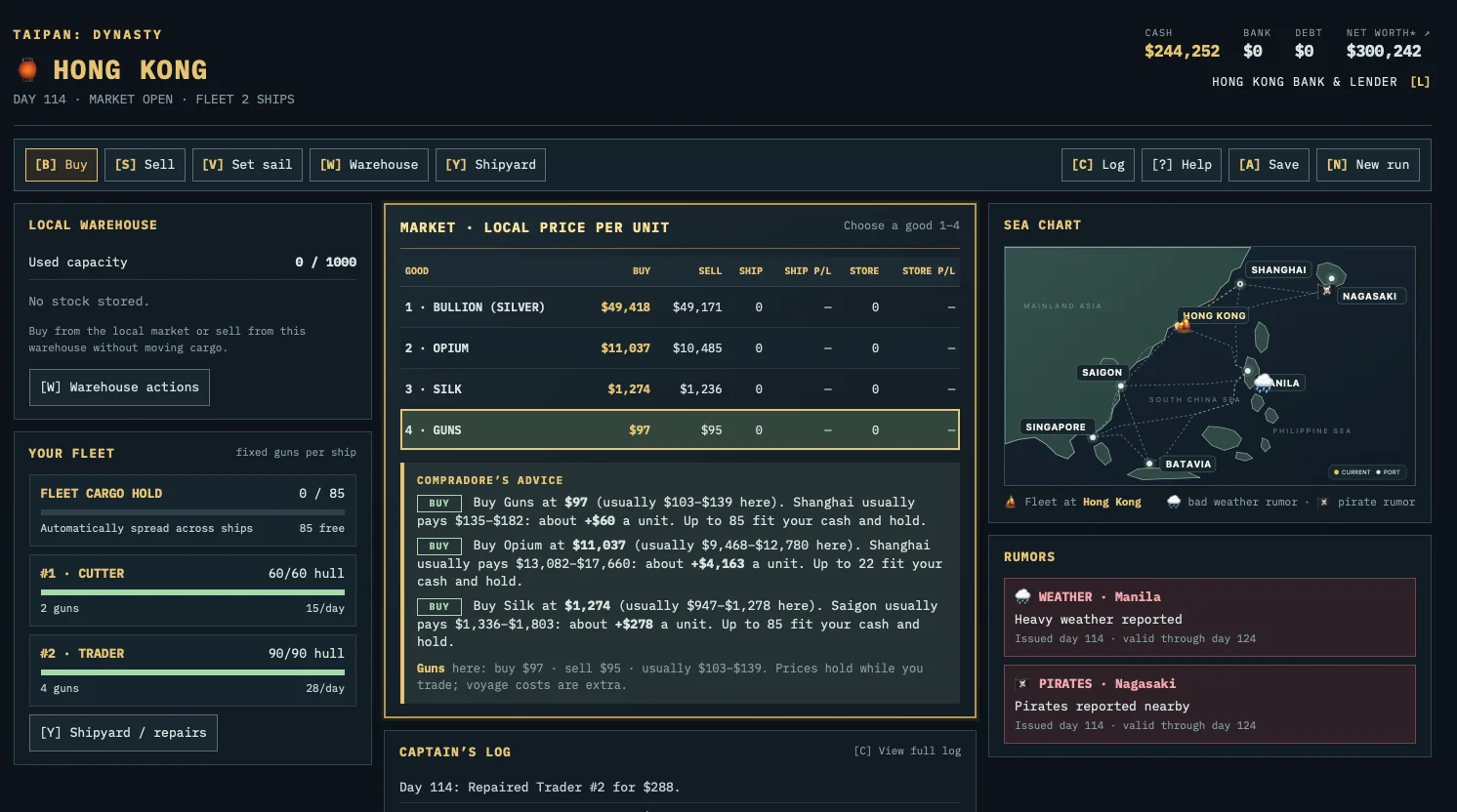
You can build warehouses in different ports, store cargo, and wait for better prices instead of carrying everything aboard your ships.
I also wanted something valuable enough to compete with opium as the ultimate high-risk trade. That led to silver bullion, an important commodity in 19th-century Asian trade and one capable of creating enormous profits or equally enormous losses.
The goal was not to create an economic simulator.
It was to make every trading decision a little more interesting.
Fight Instead of Flee
I also wanted pirate encounters to be something you might actually look forward to.
In the original game, my strategy was usually simple:
Run.
In Taipan: Dynasty, naval combat is much more important.
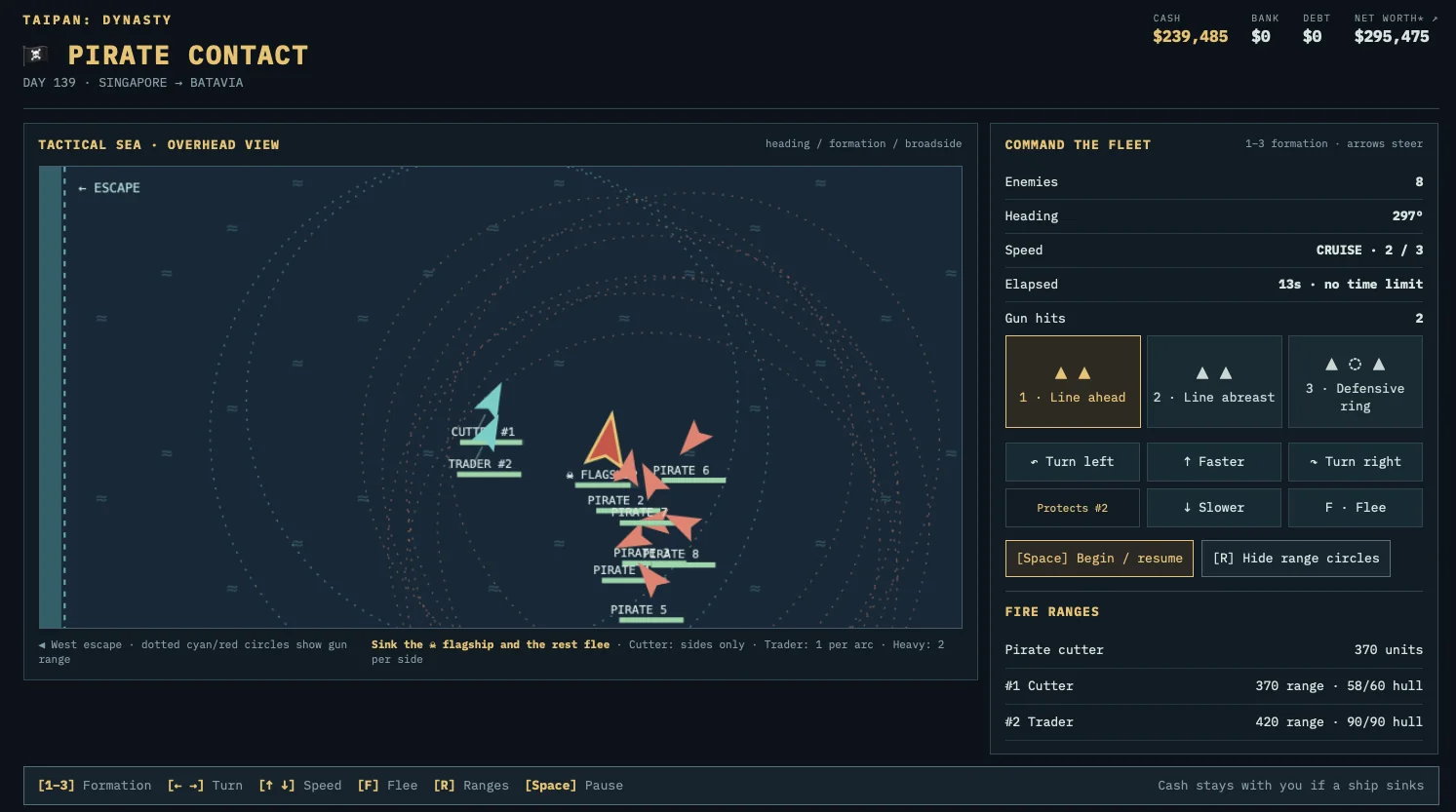
You maneuver your ships, line up broadsides, manage your guns, and decide when to attack, defend, or escape.
Sometimes running is still the smartest move.
But now fighting back can be a strategy instead of a punishment.
Build a Fleet
And yes, I said ships.
One thing I always wanted was the ability to own more than one vessel.
So now you can buy and sell different ships, each with its own cargo capacity, armament, and capabilities.
A small trader might begin with a single modest vessel.
A successful Taipan can eventually command an entire fleet.
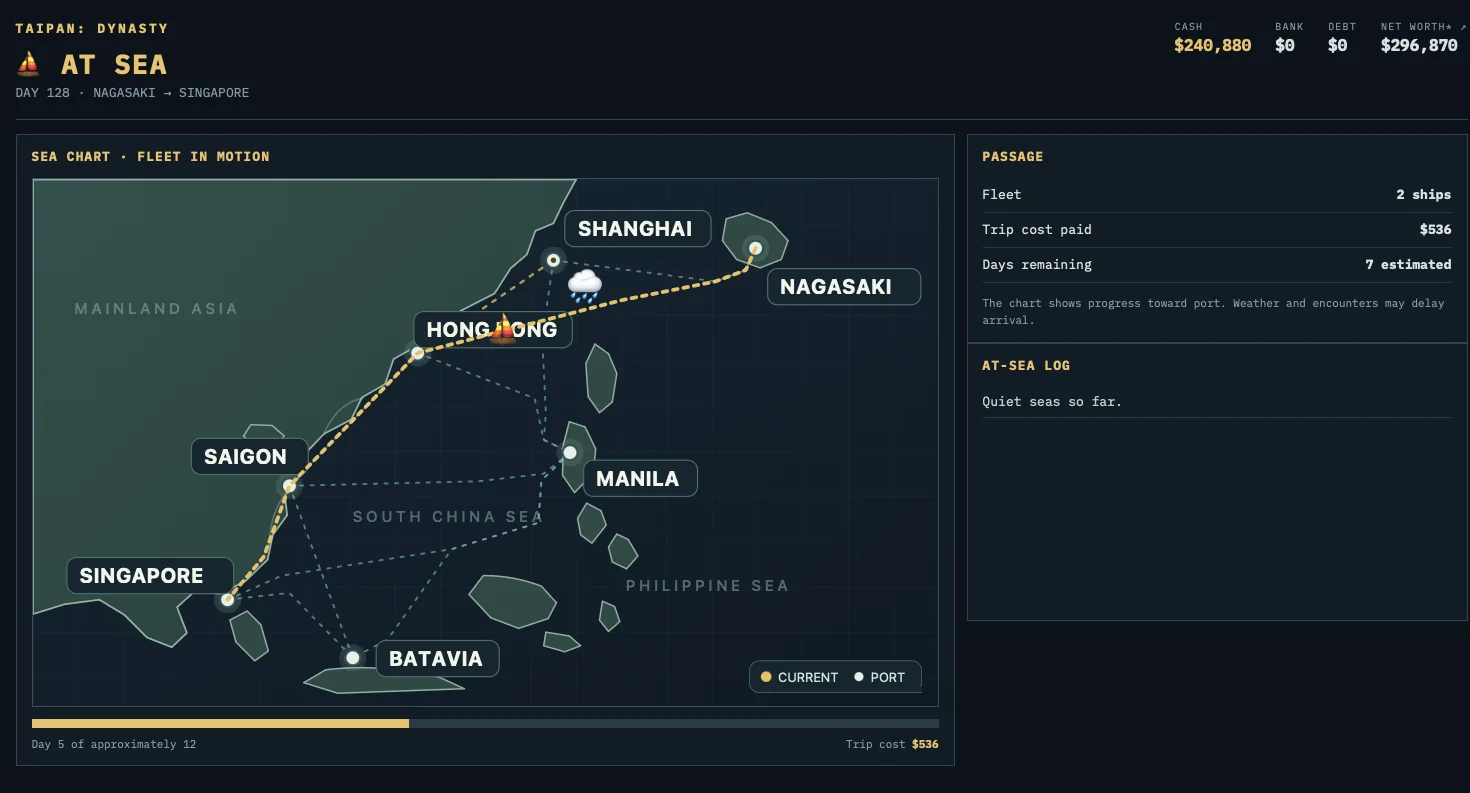
Because if you are going to build a trading dynasty, one ship hardly seems sufficient.
Wealth Has Consequences
Of course, becoming enormously wealthy should create its own problems.
The greater your fortune, the more bad joss tends to find you.
Powerful merchant rivals notice you.
Local officials discover new reasons to demand money.
Pirates become increasingly interested in your cargo.
And success has a way of creating enemies.
Building a dynasty is possible.
Keeping it is another matter.
Faithful to the Original
There are many other changes, surprises, and new systems throughout the game.
But wherever possible, I tried to preserve the spirit of the original Taipan!
That includes its humor, its simplicity, its unpredictability, and especially its keyboard-driven interface.
You should be able to play this game the way we played computer games in the early 1980s:
Hands on the keyboard.
No mouse required.
I hope you enjoy this re-imagining of one of the classic Apple ][ games that brought so much joy to a generation of young computer nerds who dreamed of becoming...
THE TAIPAN.
D. Struan